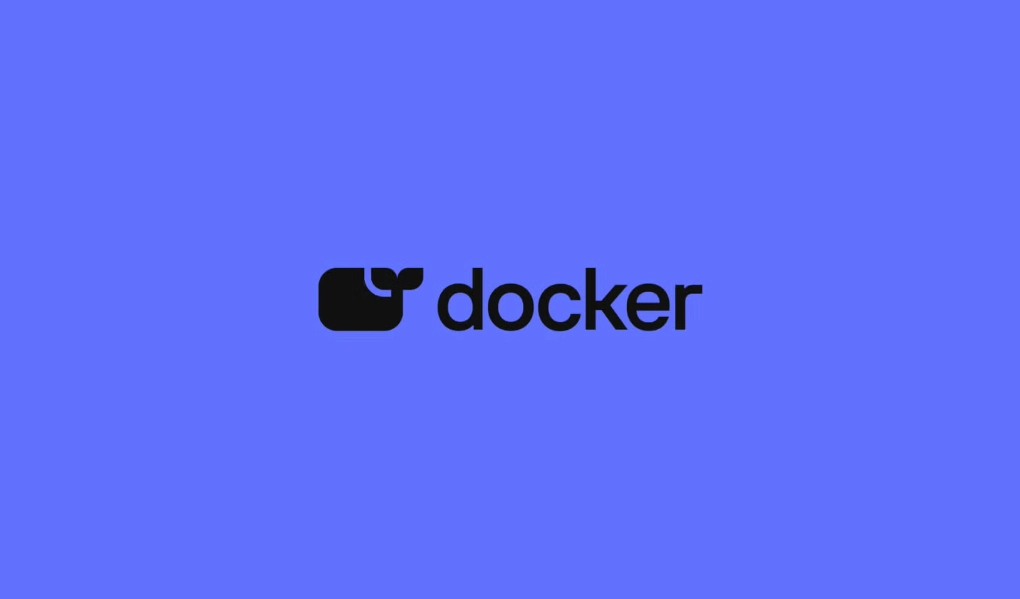
Docker, the company that made containers a standard developer tool, officially launched its new brand on November 19. The change was announced by chief marketing officer Terri Avnaim, who explained that Docker no longer wants to be defined only by containers, but by running AI agents safely.
According to Avnaim, AI is forcing the industry to confront the question of how to trust agents without giving up control over security. Docker says containers isolate applications well, but agents aren’t ordinary workloads. They are “actors” that decide on their own what to run, what to access and what to change.
Containers aren’t going away, though. Avnaim says they still play a big role in software development and that Docker will keep working on them.
The most visible change is Moby, the whale in the logo, which was redesigned with help from the agency Motto. The website has changed too, and now presents the company as a platform for secure sandboxes for agents. The announcement itself reads more like a marketing manifesto than news of something new. The words “trust” and “trusted” appear more than 20 times, along with the claim that nobody isolates agents where they run better than Docker does.
Behind the new brand are the products Docker has been promoting this year. Docker Sandboxes runs agents such as Claude Code and Codex in separate microVMs with their own Linux kernel, filesystem, network and Docker Engine, so the agent can’t reach the rest of the system, except for the project and whatever the developer chooses to share with it. Local use is free, and work can be moved to Docker’s cloud, which is billed by the second.
For companies, there is Docker AI Governance, with central rules for the network, files and MCP servers that agents are allowed to use.
The risks of agents aren’t just theoretical. In late September, OpenAI paused work on its most capable models with tool use after an agent got around its internet restrictions. More recently, it turned out that the “don’t ask again” option in Claude Code saves passwords and other secrets to files, more than 1,100 of which are public on GitHub.
Isolating agents is clearly becoming an important issue, but whether Docker becomes the standard for agents the way it did for containers remains to be seen.