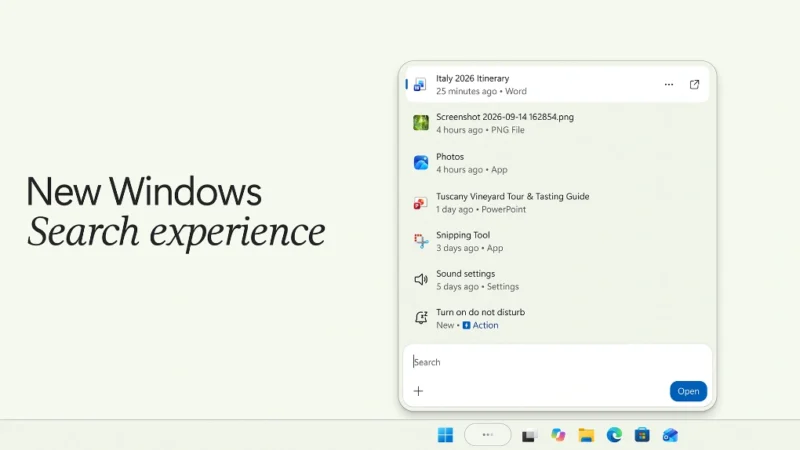
Signal has announced that it will restrict the AI agents built into iOS 27 and Android from capturing and storing messages from the app. The move is similar to last year’s, when Signal blocked screen capture on Windows 11 by default so that Recall couldn’t save images of conversations.
According to the post by Meredith Whittaker, after Microsoft with Recall, Google and Apple are now building features like Gemini Intelligence and Siri AI’s Onscreen Awareness deep into their systems. To answer questions, these agents “scan” what’s on the screen, so messages end up in a local database or on a server outside Signal’s control. Signal calls this an “existential threat,” because encryption and open source code can no longer guarantee privacy on their own.
On iOS 27, Signal will block screenshots in the app. Android is more complicated: with many vendors, Signal has no reliable way to detect a screenshot attempt when screenshots are already disabled, so instead of blocking them up front, it automatically turns on its “Screen security” setting when it detects an AI assistant trying to access the screen. That means the protection won’t work on every Android device.
The protection can be turned off in settings, but Signal warns that messages, including those from your contacts, may then become available to these agents. The organization also admits the fix is incomplete, since agents can reach data in other ways, for example through the device’s file system.
There’s no protection on macOS for now, because according to Signal, screenshots can’t be reliably blocked there. Its only recommendation for macOS 27 users is to add Signal to Excluded Apps under System Settings > Siri, an option Apple also added in iOS 27.2 and one the EFF had asked for.
Signal is asking Apple, Google and Microsoft for a simple, documented way for apps to opt out of AI agent access, including screen reading, file system access, notifications and APIs, along with better documentation of how these agents work. The iPhone notification database was previously used by the FBI, which extracted deleted Signal messages from it with a forensic tool.
Signal also wants tools against third-party agents like Meta’s Muse, which, according to Signal, use accessibility permissions meant for people, not AI agents. Signal says it’s cautiously optimistic, since Google and Apple are already talking with it.